Syrien 2025: Kein Frieden, keine Gerechtigkeit und kein Ort für Abschiebungen

Rund ein Jahr nach dem Sturz des Assad-Regimes ist Syrien weiterhin von Gewalt, Straflosigkeit und politischer Willkür geprägt. Inszenierte Wahlen und Bilder vermeintlicher Normalität ändern daran nichts. Dennoch wächst in Europa der politische Druck, geflüchtete Syrer*innen in ihr Heimatland abzuschieben. Dabei warnen Expert*innen wie das UN-Flüchtlingshilfswerk eindringlich, dass Syrien viel zu instabil ist, um Rückkehrer*innen zu schützen oder angemessen versorgen zu können. Niemand kann aktuell verlässlich einschätzen, ob das Land einen Weg in eine stabile Zukunft findet oder erneut in Gewalt versinkt.

Machtvakuum, Straflosigkeit und neue Gewalt

Nach dem Sturz des Assad-Regimes im Dezember 2024 übernahm die islamistische Miliz HTS die Kontrolle über Damaskus und beansprucht seither die politische Führung des Landes. Die Verbrechen der Assad-Ära wurden bislang nicht aufgearbeitet; mutmaßliche Täter teilweise sogar freigesprochen. Dieses Klima der Straflosigkeit lässt die Menschen im Land schutzlos zurück. Selbstjustiz, politisch motivierte Tötungen und ein tiefes Misstrauen gegenüber staatlichen Institutionen prägen den Alltag vieler Menschen.

So kam es im März beispielsweise in den Küstenregionen im März zu Massakern an Angehörigen religiöser Minderheiten wie Alawit*innen und Christ*innen, begleitet von Plünderungen und Entführungen. Es herrscht eine Atmosphäre der Angst, in der selbst grundlegende Religionsfreiheit abgeschafft wird.

Der Selbstmordanschlag auf die Mar-Elias-Kirche in Damaskus im Juni 2025, bei dem 25 Menschen getötet und Dutzende verletzt wurden, zeigt, dass selbst zentrale religiöse Orte nicht geschützt sind. Für die Bevölkerung bedeutet dies, dass Räume der Zuflucht und Gemeinschaft zu Orten der Unsicherheit geworden sind.
Besonders dramatisch war auch die Eskalation der Gewalt in der Provinz as-Sweida im Juli. Beduinische Milizen und Regierungstruppen griffen die Provinz an und lieferten sich schwere Kämpfe mit lokalen drusischen Milizen. Dabei wurden über 1.400 Menschen getötet, darunter zahlreiche Zivilist*innen, und mehr als 150.000 Menschen vertrieben. BBC-Recherchen dokumentieren zudem schwere Kriegsverbrechen: Demnach sollen Regierungssoldaten Patient*innen in einem Krankenhaus in ihren Betten erschossen haben sollen. Diese Ereignisse zeigen klar, dass die syrischen Machthaber weder Schutz bieten noch Kontrolle über wesentliche Sicherheitsbereiche besitzen.

Zermürbte Abkommen und verlorenes Vertrauen

Auch im kurdisch geprägten Nordosten Syrien bleibt die Lage instabil. Die Spannungen zwischen den Syrian Democratic Forces (SDF), einer kurdisch geführten Miliz, und der HTS reißen nicht ab. Ein am 10. März 2025 geschlossenes Abkommen sollte zur Stabilisierung der Region beitragen, blieb jedoch weitgehend wirkungslos. Das Scheitern lässt sich vor allem durch die tiefe Verunsicherung in der Bevölkerung erklären: Die brutalen Angriffe in den Küstenregionen und das Massaker in as-Sweida haben die Menschen im Nordosten in Angst versetzt. Viele fürchten, dass sich die Gewalt jederzeit auf ihre Region ausweiten könnte.

Zwar setzt sich die SDF für ein dezentrales Syrien ein, in dem Macht und Verantwortung zwischen Regionen und Zentralregierung geteilt werden, doch die Führung in Damaskus blockiert dieses Modell. Sie betrachtet Dezentralisierung als Vorstufe eines schleichenden Zerfalls des Landes. Entsprechend steht auch ein weiteres Abkommen, das nach erneuten Spannungen in Aleppo im Oktober ausgehandelt wurde, unter schlechten Vorzeichen. Ob es eingehalten wird, erscheint angesichts des tiefgreifenden Vertrauensverlusts derzeit völlig offen.

Scheinwahl statt politischem Aufbruch

Die Parlamentswahl vom 5. Oktober 2025 sollte ein Symbol für einen politischen Neuanfang sein. Stattdessen hat sie deutlich gemacht, wie fest Übergangspräsident Ahmed al-Sharaa die Macht an sich gerissen hat. Die Wahl war weder frei noch fair, denn al-Sharaa hat sowohl das Wahlverfahren als auch dessen Ergebnis kontrolliert: Nach Dekret Nr. 143/2025 ernennt er ein Drittel der Abgeordneten selbst und bestimmt die Mitglieder der Hohen Wahlkommission. Diese wiederum überwacht nicht nur den gesamten Wahlprozess, sondern bestätigt auch die Vergabe der übrigen Mandate; ein System geschlossener Kontrolle ohne unabhängige Instanzen.

Hinzu kommen bewusst vage formulierte Ausschlusskriterien, die den willkürlichen Ausschluss unerwünschter Kandidat*innen ermöglichen. Unter Vorwürfen wie angeblicher Unterstützung des früheren Regimes oder Spaltung des Landes werden politische Konkurrenten ausgeschaltet. Betroffene erhalten weder Einblick in die Vorwürfe noch die Möglichkeit, rechtlich dagegen vorzugehen. Auch von gesellschaftlicher Repräsentation kann kaum die Rede sein: Die Frauenquote von 20 Prozent bleibt symbolisch, während marginalisierte Gruppen faktisch keine Stimme haben.

In Syrien wurde kein politischer Neubeginn eingeleitet, sondern bestehende autoritäre Machtstrukturen lediglich unter neuem Namen fortgeführt.

Die Folgen für Europa: Politischer Druck statt Schutz

Trotz der katastrophalen Lage im Land fordern Konservative und Rechtsextreme in Europa zunehmend Abschiebungen nach Syrien. Österreich hat bereits erste Menschen nach Syrien abgeschoben. In Deutschland wird die Debatte vor allem vom Bundeskanzler befeuert, der sogar den syrischen Übergangspräsidenten nach Berlin eingeladen hat – eine Person, die noch bis vor kurzem als Terrorist eingestuft wurde. Die Signalwirkung dieser politischen Aufwertung ist deutlich: Sie sendet ein fatales Zeichen der Normalisierung an autoritäre und extremistische Akteure.Lediglich der Außenminister widerspricht der populistischen Rückkehrdebatte deutlich: Nach seiner Syrienreise beschrieb er die Zerstörung als „schlimmer als Deutschland 1945“.

Keine pauschale Asyl-Aussetzung: Karlsruhe stellt BAMF klar in die Schranken

Nach dem Sturz Assads setzte das Bundesamt für Migration und Flüchtlinge (BAMF), wie auch mehrere andere EU-Staaten, Asylverfahren für Syrer*innen zunächst pauschal aus. Begründet wurde das mit einem angeblichen Bedarf an weiterer „Aufklärung“. Das Bundesverfassungsgericht hat jedoch klargestellt, dass eine solche pauschale Aussetzung rechtswidrig ist. Die Lage in Syrien sei hinreichend bekannt, um Einzelfälle zu prüfen. Damit bleibt die rechtsstaatliche Verpflichtung zur Einzelfallprüfung verbindlich und nicht verhandelbar. 

In der Praxis agieren die Behörden dennoch teils zögerlich. Für Betroffene bedeutet das anhaltende Unsicherheit; gerade für jene, die seit Jahren in Deutschland leben, arbeiten und gesellschaftlich integriert sind. Anstelle von Schutz und rechtlicher Klarheit dominiert damit weiterhin politische Abschreckung.

Das Paradox der Abschiebungsdebatte: Fachkräftemangel vs. Schutzentzug

Deutschland wirbt aktiv um Fach- und Arbeitskräfte, gleichzeitig müssen viele erwerbstätige Syrer*innen um den Verlust ihres Schutzstatus fürchten. Wird dieser entzogen, verlieren Betroffene in der Regel automatisch ihre Arbeitserlaubnis. Damit geraten nicht nur jahrelange Integrationsbemühungen ins Wanken, sondern auch die Existenzgrundlage der Betriebe, die auf ihre eingearbeiteten Mitarbeiter*innen angewiesen sind. 

Eine Abschiebepolitik, die über den Entzug von Schutz funktioniert, steht damit neben menschlichen Werten auch in einem starken Widerspruch zu den eigenen arbeitsmarktpolitischen Zielen. Was als migrationspolitische Härte verkauft wird, erweist sich damit auch ökonomisch als kurzsichtig.

Es braucht Schutz statt Symbolpolitik

Angesichts der anhaltenden Gewalt, Straflosigkeit, politischen Willkür und der fragilen Sicherheitslage sind Abschiebungen nach Syrien politisch, humanitär und rechtlich unverantwortlich. Eine verantwortungsvolle deutsche und europäische Politik muss deshalb den Schutz von Geflüchteten in den Mittelpunkt stellen, rechtsstaatliche Verfahren konsequent stärken und gleichzeitig gezielten Druck auf die neuen Machthaber in Syrien ausüben, um demokratische Veränderungen einzufordern.

Außerdem müssen die Hauptaufnahmeländer Türkei, Libanon und Jordanien nachhaltig unterstützt werden. Nur durch eine Verbindung von Schutz, Rechtsstaatlichkeit und internationaler Verantwortung kann langfristig ein Umfeld entstehen, in dem eine sichere und freiwillige Rückkehr überhaupt denkbar ist.

Brief zur Lage im Sudan: EU muss dringend handeln

Gemeinsam mit anderen demokratischen Abgeordneten des EU-Parlaments haben wir uns in einem Brief an Kaja Kallas, die Hohe Vertreterin der EU für Außen- und Sicherheitspolitik, gewandt. 

Hintergrund ist die dramatische Eskalation der Gewalt im Sudan nach der Einnahme von El Fasher durch die Rapid Support Forces (RSF) am 26. Oktober 2025. Berichte über Massenmorde, außergerichtliche Hinrichtungen, systematische sexuelle Gewalt, Folter sowie ethnisch gezielte Angriffe zeigen eine massive Verschärfung der humanitären Lage und gefährden die regionale Stabilität. Deshalb fordern wir, unverzüglich zu prüfen, ob die Handlungen der RSF die Kriterien für eine Aufnahme in die EU-Terrorliste erfüllen.

Wir haben die Entwicklungen im Sudan als Europäisches Parlament bereits in einer Resolution vom 27. November 2025 verurteilt. Umso wichtiger ist es, dass über die politische Verurteilung hinaus konkrete Konsequenzen folgen und die Verantwortlichen für diese Verbrechen zur Rechenschaft gezogen werden. Für die Menschen im Sudan darf es keinen weiteren Aufschub geben.

Den ganzen Brief könnt ihr read here.

Veranstaltung: Hass, Hetze, Normalisierung – Was können wir gegen den Aufstieg der Rechtsextremen tun?

Love all,

Europaweit zeigt sich, dass auch hier rechtsextreme Kräfte auf dem Vormarsch sind. Rechtskonservative werden zu Steigbügelhaltern und radikalisieren sich dabei gleich mit. Gleichzeitig sieht sich die Zivilgesellschaft vielerorts in Europa immer stärker Repressionen und Diffamierungskampagnen ausgesetzt. Wer sich umschaut, merkt schnell: Überall versuchen Rechte zunehmend erfolgreich, ihre Narrative zu verbreiten. Angriffe auf die Demokratie, auf Frauen- und Minderheitenrechte gehen dabei Hand in Hand mit fossiler Propaganda gegen Klimaschutz und migrationsfeindlichen Ressentiments. 

Umso wichtiger ist es, Antworten auf zentrale Fragen zu finden: Warum sind die Rechten so erfolgreich? Wie verhindern wir die weitere Normalisierung der Rechtsextremen und stoppen ihren Aufstieg? Mit welchen Strategien setzen wir wieder eigene Themen auf die Agenda, statt uns auf dem Spielfeld der Rechten in endlosen Klimaleugnungs- und Migrationshetzdebatten wiederzufinden? Wie stärken wir demokratische Institutionen und eine lebendige Zivilgesellschaft? Wie schaffen wir übergreifende Bündnisse für eine wehrhafte und belastbare Demokratie? Und wie lässt sich all das in einer Zeit bewältigen, in der wir global die Erstarkung und enge Vernetzung Rechtsextremer beobachten?


Diese und weitere Fragen wollen wir erläutern und diskutieren und freuen uns auf eine lebhafte Debatte und spannende Inputs!

Die Veranstaltung wird am 17. Oktober um 19 Uhr im tak (Theater Aufbau Kreuzberg) in der Prinzenstraße 85F stattfinden.
Nach Inputs von Luisa Neubauer and Natascha Strobl findet eine Podiumsdiskussion statt. Im Anschluss wird Raum für Anmerkungen und Fragen aus dem Publikum sein.

zu den Referent*innen

Natascha Strobl, Politikwissenschaftlerin und Rechtsextremismusexpertin, spezialisiert auf Rechtsextremismus und die Neue Rechte in Europa.

Luisa Neubauer, Aktivistin, Autorin und Expertin für Klimagerechtigkeit, Mitbegründerin von Fridays-for-Future.

Erik Marquardt, seit 2019 Abgeordneter im Europäischen Parlament. Dort beschäftigt er sich mit Asyl, Migration und Menschenrechten.

Venue:

tak Theater Aufbau Kreuzberg GmbH
Prinzenstraße 85F
10969 Berlin

Datum und Uhrzeit

Getränke und Fingerfood ab 19 Uhr, Beginn der Inputs um 19:15 Uhr.

Der Eintritt ist frei.

Anmeldung

Leider ist eine Anmeldung zu unserer Veranstaltung nicht mehr möglich, da wir unsere Kapazitätsgrenze erreicht haben.

Ich freue mich auf euer Kommen, auf eure Fragen und auf eine lebendige Diskussion.

Liebe Grüße
Erik

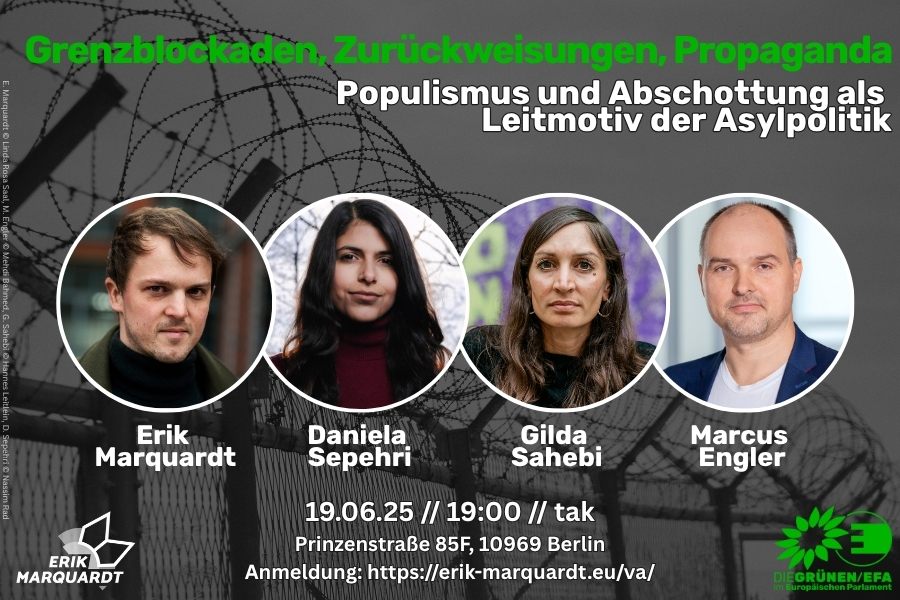
Veranstaltung: Grenzblockaden, Zurückweisungen, Propaganda – Populismus und Abschottung als Leitmotiv der Asylpolitik

Love all,

seit Jahren sehen wir, wie die Debatte um Asyl- und Migrationspolitik sich von der Realität entkoppelt und zunehmend radikalisiert. Den vorläufigen Höhepunkt dieses Theaters haben wir in diesem Jahr erlebt, als die deutsche Bundesregierung sich offen darauf einigte, sich über Recht und Gesetz hinwegzusetzen und Asylsuchende an deutschen Grenzen zurückzuweisen.

Welche Wirkung haben Grenzkontrollen in der Realität? Warum verfangen sich populistische Narrative über „Kontrolle“ und „Sicherheit“ so leicht? Welche Folgen drohen der EU, wenn der Schengenraum weiter ausgehöhlt wird? Warum gibt es so wenig Empathie mit Asylsuchenden? Wo führt all das hin? Und wie schaffen wir es, dem Populismus und den Rechtsextremen etwas entgegenzusetzen?

Diese und weitere Fragen wollen wir erläutern und diskutieren und freuen uns auf eine lebhafte Debatte und spannende Inputs!

Die Veranstaltung
wird am 19. Juni um 19 Uhr im tak (Theater Aufbau Kreuzberg) in der Prinzenstraße 85F stattfinden. Nach Inputs von Gilda Sahebi, Marcus Engler und mir – Erik Marquardt – findet eine Podiumsdiskussion statt. Im Laufe der Zeit wird Raum für Anmerkungen und Fragen aus dem Publikum sein.

zu den Referent*innen

Dr. Marcus Engler, Wissenschaftler am Deutschen Zentrum für Integrations- und Migrationsforschung (DeZIM) in der Migrationsabteilung und Autor der Expertise zu den Auswirkungen deutscher Binnengrenzkontrollen

Gilda Sahebi, Ärztin und Politikwissenschaftlerin. Sie arbeitet als freie Journalistin und Autorin mit den Schwerpunkten Antisemitismus, Rassismus, Menschenrechte, Frauenrechte und Nahost.

Daniela Sepehri, setzt sich in den sozialen Medien und als Journalistin engagiert für Feminismus, Anti-Rassismus, Migration und den Iran ein. Sie wird uns als Moderatorin durch die Veranstaltung begleiten.

Erik Marquardt, seit 2019 Abgeordneter im Europäischen Parlament. Dort beschäftigt er sich mit Asyl, Migration und Menschenrechten. Er war selbst oft an den Außengrenzen und auf Seenotrettungsmissionen im Mittelmeer. Im Parlament begleitete er beispielsweise die Verhandlungen zum Gemeinsamen Europäischen Asylsystem (GEAS) als Schattenberichterstatter.

Venue:

tak Theater Aufbau Kreuzberg GmbH
Prinzenstraße 85F
10969 Berlin

Datum und Uhrzeit

Getränke und Fingerfood ab 19 Uhr, Beginn der Inputs um 19:30 Uhr.

Der Eintritt ist frei.

Anmeldung

Bitte meldet euch bis zum 17. Juni unter dem hier hinterlegten Formular an, da wir nur begrenzte Kapazitäten vor Ort haben.

Achtung! Nach der Anmeldung gibt es KEINE Bestätigungsmail. Die Anmeldung kommt trotzdem bei uns an. Am Tag vor der Veranstaltung bekommt ihr nochmal eine Erinnerungsmail mit allen Details zugesendet.

Ich freue mich auf euer Kommen, auf eure Fragen und auf eine lebendige Diskussion.

Liebe Grüße
Erik

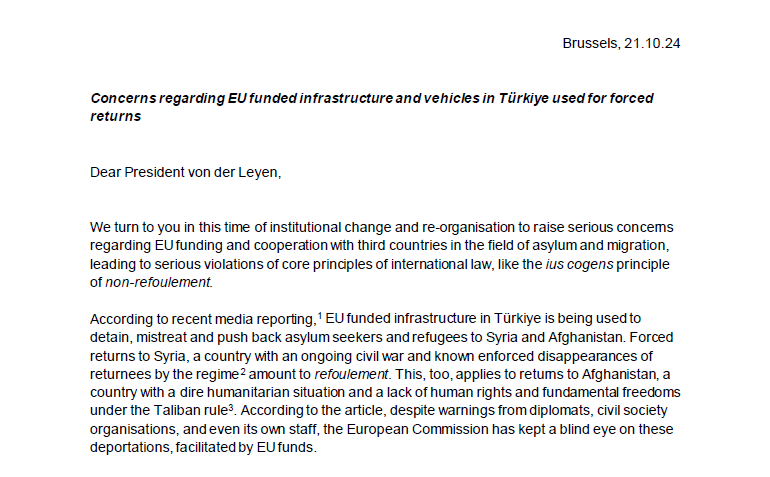
Brief an EU-Kommission: Türkei nutzt EU-Gelder für Zwangsrückführungen

Seit dem umstrittenen EU-Türkei-Deal 2016 unterstützt die EU-Kommission die türkische Regierung bei der Aufnahme von Schutzsuchenden, damit weniger Menschen nach Europa kommen und dort Asyl beantragen. Das betrifft vor allem syrische und afghanische Geflüchtete, die vor dem Bürgerkrieg und der Verfolgung durch die Taliban fliehen. 

Nun haben Medienberichte gezeigt, dass die türkische Regierung von der EU finanzierte Infrastruktur nutzt, um Schutzsuchende zu misshandeln und nach Syrien und Afghanistan zurückzuschicken, wo ihre Menschenrechte und ihre Sicherheit akut gefährdet sind. Dies ist nicht nur moralisch verwerflich, sondern verstößt vor allem schwerwiegend gegen völkerrechtliche Prinzipien wie das Gebot der Nichtzurückweisung.

Die Europäische Kommission soll trotz der Warnungen von Diplomat*innen, zivilgesellschaftlichen Organisationen und sogar ihrer eigenen Mitarbeiter*innen die Augen vor diesen Abschiebungen verschlossen haben, die mit europäischen Steuergeldern unterstützt wurden.

In einem Brief an die Kommission fordere ich deshalb gemeinsam mit 20 weiteren Europaabgeordneten die Kommission auf, die Migrationszusammenarbeit mit der Türkei zu überdenken. Während die Unterstützung der Aufnahme und Integration von Geflüchteten in der Türkei ein Ziel ist, hinter dem man stehen sollte, hat sich die politische Realität geändert. Wir erwarten von der Kommission, dass sie nicht länger die Augen vor diesen Abschiebungen verschließt und Verantwortung für die Rolle übernimmt, die europäische Gelder dabei spielen.

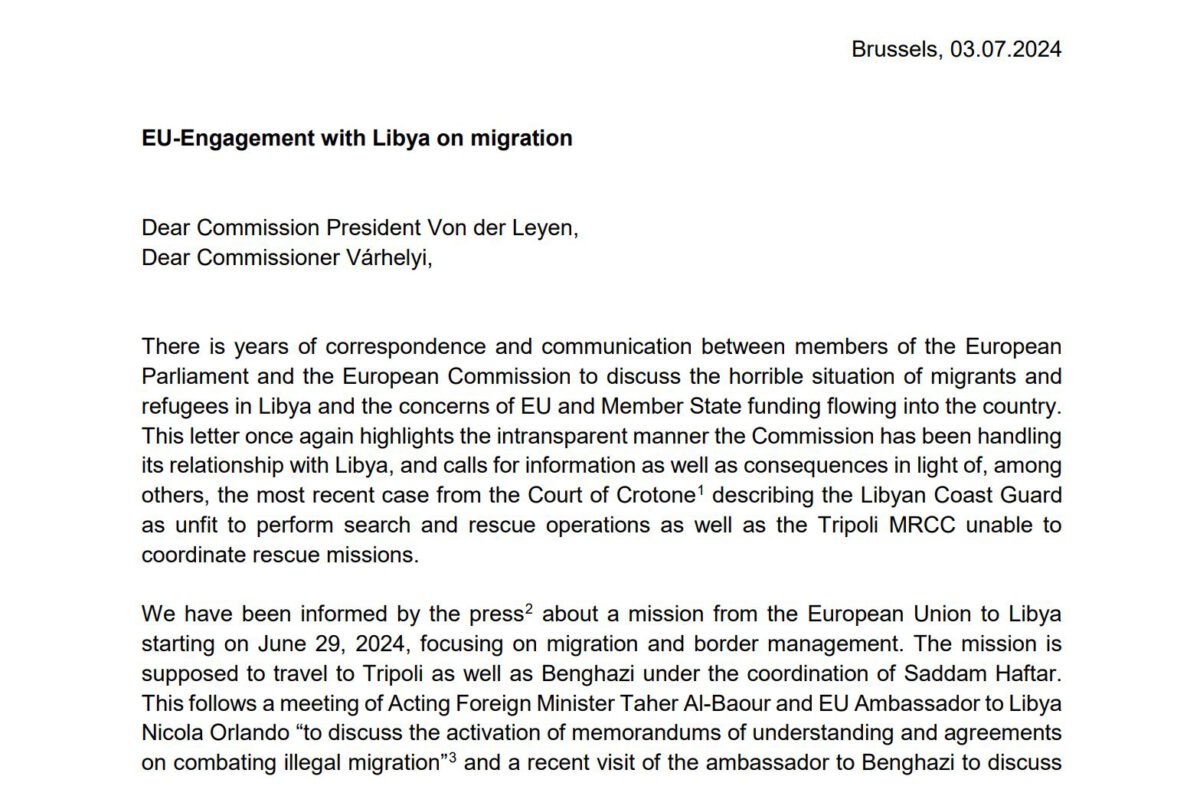
Brief an EU-Kommission: Zusammenarbeit mit Libyen

Seit Jahren unterstützt die EU-Kommission libysche Behörden mit Geldern und Infrastruktur zur Migrationsabwehr, obwohl Menschen in Libyen systematisch entrechtet werden und die Behörden systematisch Menschenrechte verletzen. Ein Ziel der Kooperation: Die Libyer sollen Boote vom Erreichen europäischer Küsten abhalten. Diese menschenrechtswidrigen Maßnahmen werden in der Europäischen Kommission als Unterstützung der Seenotrettung getarnt.

Nachdem sogar ein Gericht in Italien kürzlich festgestellt hat, dass sowohl die libysche Küstenwache als auch deren Seenotrettungsleitstelle ungeeignet sind, Such- und Rettungsaktionen im Mittelmeer durchzuführen, habe ich einen Brief an die Europäische Kommission geschrieben. Denn die Kooperation mit Libyen soll jetzt noch intensiviert werden. Das EU-Parlament ist an diesen Maßnahmen nicht beteiligt und wurde vorab auch nicht über die EU-Pläne informiert.

Ich fordere Transparenz über die Finanzierung von und Zusammenarbeit mit libyschen Akteuren, allen voran die libysche Küstenwache, durch die Kommission. Es kann nicht sein, dass EU-Gelder weiterhin Akteure unterstützen, die nachweislich an Schmuggel, Menschenhandel und schwersten Menschenrechtsverletzungen beteiligt sind. 

Stattdessen muss es unter allen Umständen eine klare Einbeziehung des Europäischen Parlaments und deutliche Menschenrechtsgarantien für jegliche EU-Finanzierung in Libyen geben. Die Zusammenarbeit mit der libyschen Küstenwache muss außerdem sofort beendet werden. Das hätte schon vor Jahren passieren müssen.

Hier könnt ihr euch den Brief durchlesen (auf Englisch).

Briefing: Reform of the Schengen Borders Code

What is it about?

The Schengen Borders Code regulates entry conditions and border controls at the EU's external and internal borders. It deals, for example, with the question of the conditions under which internal border controls are possible.

The Borders Code is an important instrument for ensuring freedom of movement in Europe; however, Member States often do not comply with the Code. For example, they introduce internal border controls and disregard the legal basis for them. These controls jeopardize the Schengen area by hindering the free movement of people, goods and services, which is so important for the functioning of the EU and its associated countries (Switzerland, Norway, Iceland and Liechtenstein). In border regions in particular, internal border controls not only cost a lot of money, but also restrict people's lives. At the same time, they often do not lead to the achievement of self-imposed goals, for example because they cannot prevent asylum applications, although this is repeatedly claimed.

The reform

The European Commission attempted to reform the Schengen Borders Code in 2017, but the member states were unable to agree on a common position.

After the Member States closed internal borders during the coronavirus pandemic without coordination at EU level, the Commission proposed a new reform that includes provisions for major health emergencies, such as pandemics.
The Commission proposal from December 2021 was controversial to say the least, followed by an even more problematic Negotiating position of the Member States. Despite the often emphasized importance of the Schengen area for the realization of freedom of movement in the EU, these texts would have led to Member States being able to introduce endless internal border controls under certain circumstances. The European Parliament, on the other hand, with its Negotiating position a compromise that protects the Schengen area.

ECJ ruling on border controls

Parallel to the reform process of the Schengen Borders Code, the European Court of Justice has ruled in a Basic ruling not only interpreted the duration of internal border controls under the current code very strictly, but also clearly stated that endless internal border controls violate the freedom of movement enshrined in EU law. This made it clear that freedom of movement is a right that EU member states may not restrict indefinitely. The co-legislators (Council and Parliament) must therefore find a balance between "freedom" and "security" that only works with a fixed time limit for internal border controls in the reformed Schengen Borders Code.

The final compromise

The interinstitutional negotiations led to a Compromiseon which we will vote in the European Parliament in the last plenary week of the legislative period (end of April 2024).
We are critical of the outcome of the negotiations because: The maximum Duration of internal border controls to be increased from the current 6 months to 3 years. However, Member States have a new, more detailed reporting obligation when they introduce internal border controls. In return, the Commission has slightly more duties and powers to monitor application. Experts doubt whether this will lead to border controls being more restricted.

It will also there are additional reasons to allow internal border controls. This sensibly includes a health emergency on a large scale, but also the highly controversial reason of unauthorized secondary migration of third-country nationals on a large scale. This effectively legalizes the practice that has been in place since 2015 of member states introducing internal border controls in order to "curb" "irregular" migration.

The outcome of the negotiations also includes a new procedure for the internal transfer of third-country nationals without the right to stay between member states. This procedure will probably lead to an increase in "racial profiling" and, in the worst case, even Chain deportations can take place.

The introduction of the term "Instrumentalization", Member States can limit the number of border crossing points and their opening hours and intensify border surveillance if they feel that they are being instrumentalized. However, the exact cases that are considered instrumentalization are not defined at all and are therefore left to the discretion of the member states. In addition, the possibilities for police checks and the general number of police officers deployed on the territory have been Control and monitoring technologies expanded. These additional provisions shall enter into force immediately after publication if Parliament and the Council have given their consent.

In practice, however, it remains to be seen whether the Member States will actually comply with these new rules and whether the Commission will use its powers as guardian of the treaties to ensure that they do.

The world's first AI law: why it must protect people on the run in particular

Agreement on the first law to regulate artificial intelligence

As part of its digital strategy, the European Commission has developed a Legal act on the regulation of artificial intelligence (AI Act) was proposed to ensure better conditions for the development and use of artificial intelligence (AI) in Europe and to prevent risks. The aim of the legislators was to reconcile the advantages and opportunities of AI with the protection of fundamental rights and the prevention of threats.

After long and complicated negotiations, in December 2023 we, as Parliament, adopted a Agreement with the Council of the EU (i.e. the member states). This is the first ever regulation on the regulation of AI, which is a great success. Even though many areas of application for artificial intelligence are still being researched, it is already clear that further regulation will be needed in the future. We Greens would also have liked to see more extensive regulations, particularly with a focus on the protection of fundamental rights and vulnerable groups. For example, there is still a risk that Prejudice and discrimination are reinforced by AI. Amnesty International also shows what risks the digital age and artificial intelligence pose for the rights of asylum seekers in a detailed report on.

The dangers of artificial intelligence using the example of migration control management

At the Border protection has unfortunately not succeededThe use of artificial intelligence is also a major challenge, as is the regulation of real-time monitoring and other measures. Furthermore, the use of artificial intelligence great danger that the rights of marginalized groups of peoplefor example of asylum seekers or migrants, are violated. This can happen through profiling, automated "risk assessments" and pervasive surveillance practices. EU governments are increasingly deploying AI-powered surveillance systems at borders. These systems use algorithms to analyze data from cameras, drones and sensors to help border guards make decisions in real time. AI is also to be used in asylum procedures, for example in the processing of asylum applications. This can lead to relevant misjudgements and complicated, bureaucratic procedures. The AI Act will only make a limited contribution to preventing such risks.

Certain AI applications raise significant ethical and legal concerns, such as Lie detectors and Biometric recognition systems. This is where the AI Act comes in and regulates such surveillance options. However, we Greens have not been able to assert ourselves in all areas, meaning that there is still a risk of misuse of the technology in border surveillance, for example. There is currently a clear lack of reliable data on the susceptibility of such technologies to errors, particularly in the case of facial recognition. Such systems carry the risk of violating fundamental human rights, such as the right to privacy and the principle of non-refoulement, which prohibits turning people back to areas where they are in imminent danger.

What needs to be considered in the further development of relevant legislation

For further development, it is important to point out significant weaknesses in the AI Act, even if it is fundamentally a great success that there is a Europe-wide entry into the regulation of AI. The compromise found in the AI Act is to ban certain forms of artificial intelligence that are classified as dangerous, while other AI functions are classified as high-risk, requiring strict monitoring and adherence to strict regulatory standards. 

Despite considerable concessions that we as the Greens had to make, such as the lack of a ban on biometric surveillance, significant shortcomings in the classification system for high-risk AI and broad exemptions for the use of AI in law enforcement, we as a group are satisfied with the outcome of the negotiations. The future will show how robust and future-proof this regulation will be in view of the rapid technological developments surrounding AI. There will probably have to be adjustments in the near future.

The most important successes for our Group include

  • The scope of the AI Regulation, which now also includes general AI.
  • Definitions of AI systems that are consistent with international standards and the OECD principles.
  • Ban on real-time remote biometric identification etc. in publicly accessible areas.
  • Categorization of high-risk AI systems and associated obligations and restrictions.
  • A fundamental rights impact assessment before the introduction of a high-risk system.
  • Obligations for general AI models, including technical documentation and transparency.
  • Environmental obligations, which are a new focus of the law
  • A new Commission "AI Office" to monitor and enforce the rules for general AI models.
  • Transparency rules for deepfakes and regulatory sandboxes to support start-ups and SMEs in developing AI that is fully compliant with the Regulation.

Reform of work and residence permits

During the final trilogue on the recast of the Single Permit Directive in January, it was an agreement reached

What is the directive about?

Around 3 to 3.5 million third-country nationals enter the EU every yearmainly for professional reasons. They work in EU countries, pay taxes and, through their mobility, help companies to find urgently needed workers. The Combined Permit Directive allows these people a simplified application process and ensures that an applicant only needs one permit to both work and reside in the EU. It gives many non-EU citizens working in the EU the right to be treated like EU citizens in many respects. This applies in particular with regard to fair working conditions, social security, recognition of qualifications and tax benefits. 

History of the Single Permit Directive

The directive has been in force since 2011; the aim of the revision was to simplify the procedure for obtaining a combined work and residence permit and to make it easier for member states to recruit qualified workers from third countries. This is intended to counteract the shortage of skilled workers in the EU. In addition, labor migration is a legal alternative that can enable people seeking protection to avoid dangerous irregular escape routes. To ensure that they are protected after their arrival, the updated regulations also provide for increased protection against exploitation and unequal treatment in the Member States. Workers from third countries will receive a uniform package of rights with regard to their working conditions, social security and the recognition of their qualifications as a result of the revision. In return, they must comply with the respective regulations, otherwise their combined work and residence permit may be withdrawn.

What was important to us Greens

In the negotiations, it was important to us Greens to reduce bureaucratic hurdles and give more people access to a combined work and residence permit. In addition, we wanted better protection against exploitation when taking up work in the Member States, e.g. through an obligation to provide information and the introduction of a right to change employer as well as a strengthened right to equal treatment. I will explain some of our main concerns below.

Fewer bureaucratic hurdles

We were able to partially achieve these goals, as the agreed text contains some improvements compared to the previous regulations. For example, a maximum period of 90 days has been set for deciding on applications for a single permit, compared to the current four months. Procedures for particularly complex cases can be extended by 30 days. However, we would have very much liked these deadlines to include the potentially long-term processing times for people who need a visa. We also wanted accelerated procedures for applicants who already have a permit in another Member State or have participated in EU Talent Partnerships; Member States are now only encouraged to accelerate such applications through the recital.

Change of:employer:in

The option to change employer(s), profession and area of work was also particularly important to us. During the negotiations, we were able to ensure that a simple notification from the new employer is sufficient for such a change. However, the national authorities still have 45 days to reject the change. Member states can also stipulate a period of up to six months during which a change is not possible. An exception is made for serious breaches of the employment contract, including particularly exploitative working conditions, by the employer. Unfortunately, the provisions do not go as far as we would have liked.

Protection even in the event of unemployment

People who lose their job will now have up to three months – or six if the person has held their work permit for more than two years – to find another job before their permit is revoked. This is two – or four – months longer than was previously the case. If an employee has been exposed to particularly exploitative working conditions, the member states will extend the permitted duration of unemployment by three months, while the combined permit remains valid. In the event of unemployment for more than three months, Member States may require the holder of the single permit to prove that he or she has sufficient resources to support himself or herself without recourse to social assistance. Member States are also obliged by a new article to monitor and sanction violations of workers' rights, especially in sectors where there is a fundamentally high risk of violations of workers' rights.

What now?

The new provisions are a step in the right direction, but we must continue to work to remove obstacles to labor migration and create opportunities for protection. This includes, for example, our wish that the restrictions on the right to equal treatment in housing only apply to public housing – and not to private housing. This time, we were only able to achieve an exception for private housing and, in view of the EU's increasingly restrictive migration policy, which is based on isolation and externalization, it is also essential to promote legal migration routes such as labour migration.

Study shows widespread racism in the EU

The current report "Being black in the EU" concludes that racism, discrimination and hate crime remain a major problem, despite the existence of binding anti-discrimination laws since 2000. Key findings include that almost half of respondents have experienced racial discrimination – an increase from 39 % in 2016 to 45 % in 2022. Reasons for discrimination include personal characteristics protected by EU law such as skin color, ethnic origin and religious beliefs. More than half of respondents who felt discriminated against in at least one area of their lives stated that they were discriminated against on several grounds. Skin color, ethnic origin or migration background were the most frequently cited reasons.  

Methodik

The responses from 6,752 people from sub-Saharan Africa and their descendants residing in 13 EU Member States were analyzed: Austria, Belgium, Denmark, Finland, France, Germany, Ireland, Italy, Luxembourg, Poland, Portugal, Spain and Sweden. The most important selection criterion was the country of birth of the respondents or their parents. This means that respondents were either born in a sub-Saharan African country (immigrants) or born in the EU with at least one parent born in a sub-Saharan African country (descendants of immigrants).

High number of unreported cases

Although assaults are still widespread, two thirds (64%) of victims of racist violence stated that they had not reported the last incident they had experienced to any organization or body. This is despite the fact that most victims of racist violence suffer from psychological problems and fear being attacked again. Some respondents did not report the incident because they felt it would not make a difference (36 %) or because they felt reporting would be too bureaucratic or time-consuming (19 %). Others did not report the incident because they were afraid that no one would believe them or take them seriously, because they did not trust the police or were afraid of the police (16 % each). 15 % of the victims of racist violence did not know where to go or who to contact to make a report.

Discrimination in many areas 

The discrimination experienced also continues in the areas of employment, housing and healthcare. While the average employment rate for people of African descent aged 20-64 (71 %) is similar to that of the general population (73 %) in the same age group, a third (32 %) of employed respondents work in elementary occupations, compared to an average of 8 % for the general population across the 27 EU Member States. The over-qualification rate is higher for respondents of African descent than for the general population, regardless of whether they are nationals of the survey country (35 % compared to 21 %) or third-country nationals (57 % compared to 40 %).

Poverty 

Respondents are also more at risk of poverty, social exclusion and energy poverty than the general population. A third (32 %) of them struggle to make ends meet, compared to 18 % of the general population. 14 % cannot afford to keep their home warm, compared to 7 % of the general population. 18 % are in arrears with their electricity and gas bills, more than twice as many as the general population (6 %). Almost one in two respondents (45 %) in the 13 countries surveyed live in overcrowded housing, a much higher proportion than in the general population (17 %).

Those who try to rent or buy a home are also racially discriminated against. In some countries, this is mitigated by social housing. One in four (23 %) of respondents of African descent said that a private property owner had prevented them from renting an apartment or house because of their skin color or ethnic origin. Respondents were more than four times as likely to experience discrimination when trying to rent from a private owner than when trying to rent from a public or local authority (5 %).

racial profiling 

In addition, more than half of people of African descent believe that their most recent police stop was the result of racial profiling. The survey results show that experiences of racial discrimination can undermine trust in public institutions, including the police, the legal system and local authorities. For example, average trust in the police is 1.2 percentage points lower among respondents who have felt racially discriminated against compared to respondents who had not experienced racial discrimination. Comparing the 2016 and 2022 results in terms of perceived racial profiling among respondents of African descent, the average rate across all countries surveyed increased from 41 % (2016) to 48 % (2022). Men are more likely to be stopped than women.

EN