Syrien 2025: Kein Frieden, keine Gerechtigkeit und kein Ort für Abschiebungen

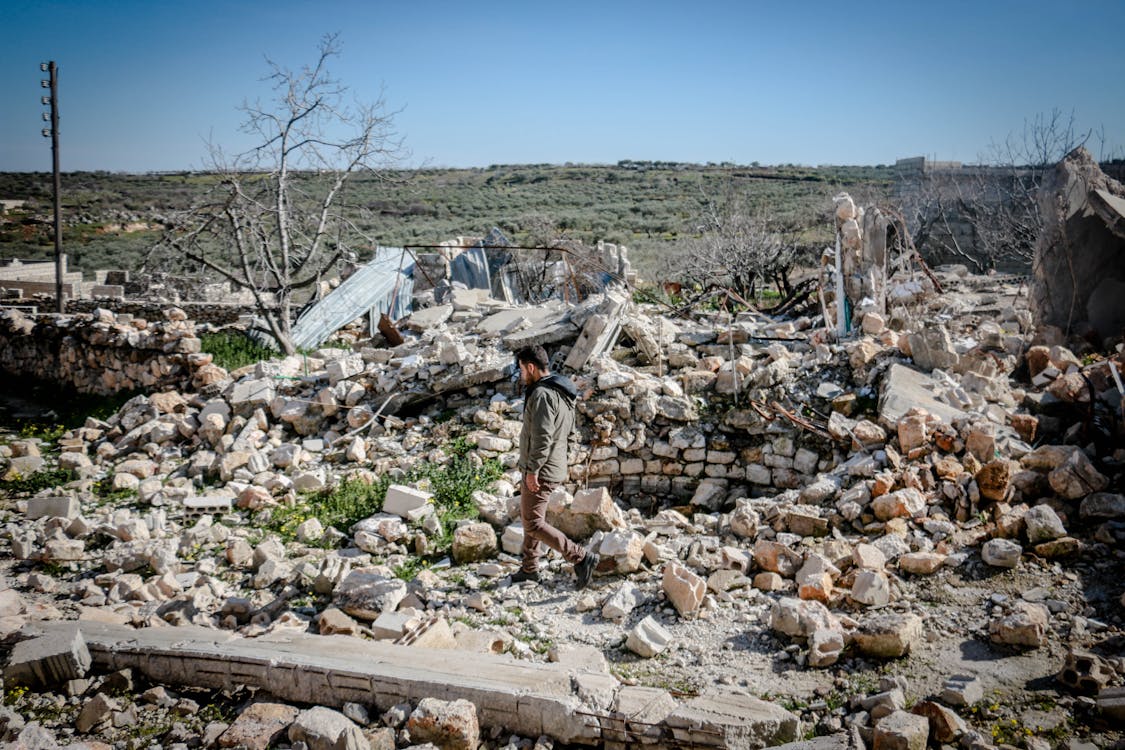
Rund ein Jahr nach dem Sturz des Assad-Regimes ist Syrien weiterhin von Gewalt, Straflosigkeit und politischer Willkür geprägt. Inszenierte Wahlen und Bilder vermeintlicher Normalität ändern daran nichts. Dennoch wächst in Europa der politische Druck, geflüchtete Syrer*innen in ihr Heimatland abzuschieben. Dabei warnen Expert*innen wie das UN-Flüchtlingshilfswerk eindringlich, dass Syrien viel zu instabil ist, um Rückkehrer*innen zu schützen oder angemessen versorgen zu können. Niemand kann aktuell verlässlich einschätzen, ob das Land einen Weg in eine stabile Zukunft findet oder erneut in Gewalt versinkt.

Machtvakuum, Straflosigkeit und neue Gewalt

Nach dem Sturz des Assad-Regimes im Dezember 2024 übernahm die islamistische Miliz HTS die Kontrolle über Damaskus und beansprucht seither die politische Führung des Landes. Die Verbrechen der Assad-Ära wurden bislang nicht aufgearbeitet; mutmaßliche Täter teilweise sogar freigesprochen. Dieses Klima der Straflosigkeit lässt die Menschen im Land schutzlos zurück. Selbstjustiz, politisch motivierte Tötungen und ein tiefes Misstrauen gegenüber staatlichen Institutionen prägen den Alltag vieler Menschen.

So kam es im März beispielsweise in den Küstenregionen im März zu Massakern an Angehörigen religiöser Minderheiten wie Alawit*innen und Christ*innen, begleitet von Plünderungen und Entführungen. Es herrscht eine Atmosphäre der Angst, in der selbst grundlegende Religionsfreiheit abgeschafft wird.

Der Selbstmordanschlag auf die Mar-Elias-Kirche in Damaskus im Juni 2025, bei dem 25 Menschen getötet und Dutzende verletzt wurden, zeigt, dass selbst zentrale religiöse Orte nicht geschützt sind. Für die Bevölkerung bedeutet dies, dass Räume der Zuflucht und Gemeinschaft zu Orten der Unsicherheit geworden sind.
Besonders dramatisch war auch die Eskalation der Gewalt in der Provinz as-Sweida im Juli. Beduinische Milizen und Regierungstruppen griffen die Provinz an und lieferten sich schwere Kämpfe mit lokalen drusischen Milizen. Dabei wurden über 1.400 Menschen getötet, darunter zahlreiche Zivilist*innen, und mehr als 150.000 Menschen vertrieben. BBC-Recherchen dokumentieren zudem schwere Kriegsverbrechen: Demnach sollen Regierungssoldaten Patient*innen in einem Krankenhaus in ihren Betten erschossen haben sollen. Diese Ereignisse zeigen klar, dass die syrischen Machthaber weder Schutz bieten noch Kontrolle über wesentliche Sicherheitsbereiche besitzen.

Zermürbte Abkommen und verlorenes Vertrauen

Auch im kurdisch geprägten Nordosten Syrien bleibt die Lage instabil. Die Spannungen zwischen den Syrian Democratic Forces (SDF), einer kurdisch geführten Miliz, und der HTS reißen nicht ab. Ein am 10. März 2025 geschlossenes Abkommen sollte zur Stabilisierung der Region beitragen, blieb jedoch weitgehend wirkungslos. Das Scheitern lässt sich vor allem durch die tiefe Verunsicherung in der Bevölkerung erklären: Die brutalen Angriffe in den Küstenregionen und das Massaker in as-Sweida haben die Menschen im Nordosten in Angst versetzt. Viele fürchten, dass sich die Gewalt jederzeit auf ihre Region ausweiten könnte.

Zwar setzt sich die SDF für ein dezentrales Syrien ein, in dem Macht und Verantwortung zwischen Regionen und Zentralregierung geteilt werden, doch die Führung in Damaskus blockiert dieses Modell. Sie betrachtet Dezentralisierung als Vorstufe eines schleichenden Zerfalls des Landes. Entsprechend steht auch ein weiteres Abkommen, das nach erneuten Spannungen in Aleppo im Oktober ausgehandelt wurde, unter schlechten Vorzeichen. Ob es eingehalten wird, erscheint angesichts des tiefgreifenden Vertrauensverlusts derzeit völlig offen.

Scheinwahl statt politischem Aufbruch

Die Parlamentswahl vom 5. Oktober 2025 sollte ein Symbol für einen politischen Neuanfang sein. Stattdessen hat sie deutlich gemacht, wie fest Übergangspräsident Ahmed al-Sharaa die Macht an sich gerissen hat. Die Wahl war weder frei noch fair, denn al-Sharaa hat sowohl das Wahlverfahren als auch dessen Ergebnis kontrolliert: Nach Dekret Nr. 143/2025 ernennt er ein Drittel der Abgeordneten selbst und bestimmt die Mitglieder der Hohen Wahlkommission. Diese wiederum überwacht nicht nur den gesamten Wahlprozess, sondern bestätigt auch die Vergabe der übrigen Mandate; ein System geschlossener Kontrolle ohne unabhängige Instanzen.

Hinzu kommen bewusst vage formulierte Ausschlusskriterien, die den willkürlichen Ausschluss unerwünschter Kandidat*innen ermöglichen. Unter Vorwürfen wie angeblicher Unterstützung des früheren Regimes oder Spaltung des Landes werden politische Konkurrenten ausgeschaltet. Betroffene erhalten weder Einblick in die Vorwürfe noch die Möglichkeit, rechtlich dagegen vorzugehen. Auch von gesellschaftlicher Repräsentation kann kaum die Rede sein: Die Frauenquote von 20 Prozent bleibt symbolisch, während marginalisierte Gruppen faktisch keine Stimme haben.

In Syrien wurde kein politischer Neubeginn eingeleitet, sondern bestehende autoritäre Machtstrukturen lediglich unter neuem Namen fortgeführt.

Die Folgen für Europa: Politischer Druck statt Schutz

Trotz der katastrophalen Lage im Land fordern Konservative und Rechtsextreme in Europa zunehmend Abschiebungen nach Syrien. Österreich hat bereits erste Menschen nach Syrien abgeschoben. In Deutschland wird die Debatte vor allem vom Bundeskanzler befeuert, der sogar den syrischen Übergangspräsidenten nach Berlin eingeladen hat – eine Person, die noch bis vor kurzem als Terrorist eingestuft wurde. Die Signalwirkung dieser politischen Aufwertung ist deutlich: Sie sendet ein fatales Zeichen der Normalisierung an autoritäre und extremistische Akteure.Lediglich der Außenminister widerspricht der populistischen Rückkehrdebatte deutlich: Nach seiner Syrienreise beschrieb er die Zerstörung als „schlimmer als Deutschland 1945“.

Keine pauschale Asyl-Aussetzung: Karlsruhe stellt BAMF klar in die Schranken

Nach dem Sturz Assads setzte das Bundesamt für Migration und Flüchtlinge (BAMF), wie auch mehrere andere EU-Staaten, Asylverfahren für Syrer*innen zunächst pauschal aus. Begründet wurde das mit einem angeblichen Bedarf an weiterer „Aufklärung“. Das Bundesverfassungsgericht hat jedoch klargestellt, dass eine solche pauschale Aussetzung rechtswidrig ist. Die Lage in Syrien sei hinreichend bekannt, um Einzelfälle zu prüfen. Damit bleibt die rechtsstaatliche Verpflichtung zur Einzelfallprüfung verbindlich und nicht verhandelbar. 

In der Praxis agieren die Behörden dennoch teils zögerlich. Für Betroffene bedeutet das anhaltende Unsicherheit; gerade für jene, die seit Jahren in Deutschland leben, arbeiten und gesellschaftlich integriert sind. Anstelle von Schutz und rechtlicher Klarheit dominiert damit weiterhin politische Abschreckung.

Das Paradox der Abschiebungsdebatte: Fachkräftemangel vs. Schutzentzug

Deutschland wirbt aktiv um Fach- und Arbeitskräfte, gleichzeitig müssen viele erwerbstätige Syrer*innen um den Verlust ihres Schutzstatus fürchten. Wird dieser entzogen, verlieren Betroffene in der Regel automatisch ihre Arbeitserlaubnis. Damit geraten nicht nur jahrelange Integrationsbemühungen ins Wanken, sondern auch die Existenzgrundlage der Betriebe, die auf ihre eingearbeiteten Mitarbeiter*innen angewiesen sind. 

Eine Abschiebepolitik, die über den Entzug von Schutz funktioniert, steht damit neben menschlichen Werten auch in einem starken Widerspruch zu den eigenen arbeitsmarktpolitischen Zielen. Was als migrationspolitische Härte verkauft wird, erweist sich damit auch ökonomisch als kurzsichtig.

Es braucht Schutz statt Symbolpolitik

Angesichts der anhaltenden Gewalt, Straflosigkeit, politischen Willkür und der fragilen Sicherheitslage sind Abschiebungen nach Syrien politisch, humanitär und rechtlich unverantwortlich. Eine verantwortungsvolle deutsche und europäische Politik muss deshalb den Schutz von Geflüchteten in den Mittelpunkt stellen, rechtsstaatliche Verfahren konsequent stärken und gleichzeitig gezielten Druck auf die neuen Machthaber in Syrien ausüben, um demokratische Veränderungen einzufordern.

Außerdem müssen die Hauptaufnahmeländer Türkei, Libanon und Jordanien nachhaltig unterstützt werden. Nur durch eine Verbindung von Schutz, Rechtsstaatlichkeit und internationaler Verantwortung kann langfristig ein Umfeld entstehen, in dem eine sichere und freiwillige Rückkehr überhaupt denkbar ist.

Brief zur Lage im Sudan: EU muss dringend handeln

Gemeinsam mit anderen demokratischen Abgeordneten des EU-Parlaments haben wir uns in einem Brief an Kaja Kallas, die Hohe Vertreterin der EU für Außen- und Sicherheitspolitik, gewandt. 

Hintergrund ist die dramatische Eskalation der Gewalt im Sudan nach der Einnahme von El Fasher durch die Rapid Support Forces (RSF) am 26. Oktober 2025. Berichte über Massenmorde, außergerichtliche Hinrichtungen, systematische sexuelle Gewalt, Folter sowie ethnisch gezielte Angriffe zeigen eine massive Verschärfung der humanitären Lage und gefährden die regionale Stabilität. Deshalb fordern wir, unverzüglich zu prüfen, ob die Handlungen der RSF die Kriterien für eine Aufnahme in die EU-Terrorliste erfüllen.

Wir haben die Entwicklungen im Sudan als Europäisches Parlament bereits in einer Resolution vom 27. November 2025 verurteilt. Umso wichtiger ist es, dass über die politische Verurteilung hinaus konkrete Konsequenzen folgen und die Verantwortlichen für diese Verbrechen zur Rechenschaft gezogen werden. Für die Menschen im Sudan darf es keinen weiteren Aufschub geben.

Den ganzen Brief könnt ihr read here.

Neue Studie zu Binnengrenzkontrollen: Symbolpolitik statt Lösungen

Für die Grüne Europafraktion habe ich eine neue Studie zu den Auswirkungen der stationären deutschen Binnengrenzkontrollen in Auftrag gegeben. Das Ergebnis: Sie halten nicht, was sie versprechen. Sie sind teuer, herzlos und nutzlos. Hier könnt ihr die Studie nachlesen. Und hier eine kurze Zusammenfassung:

Politische Sprechblasen statt Fakten

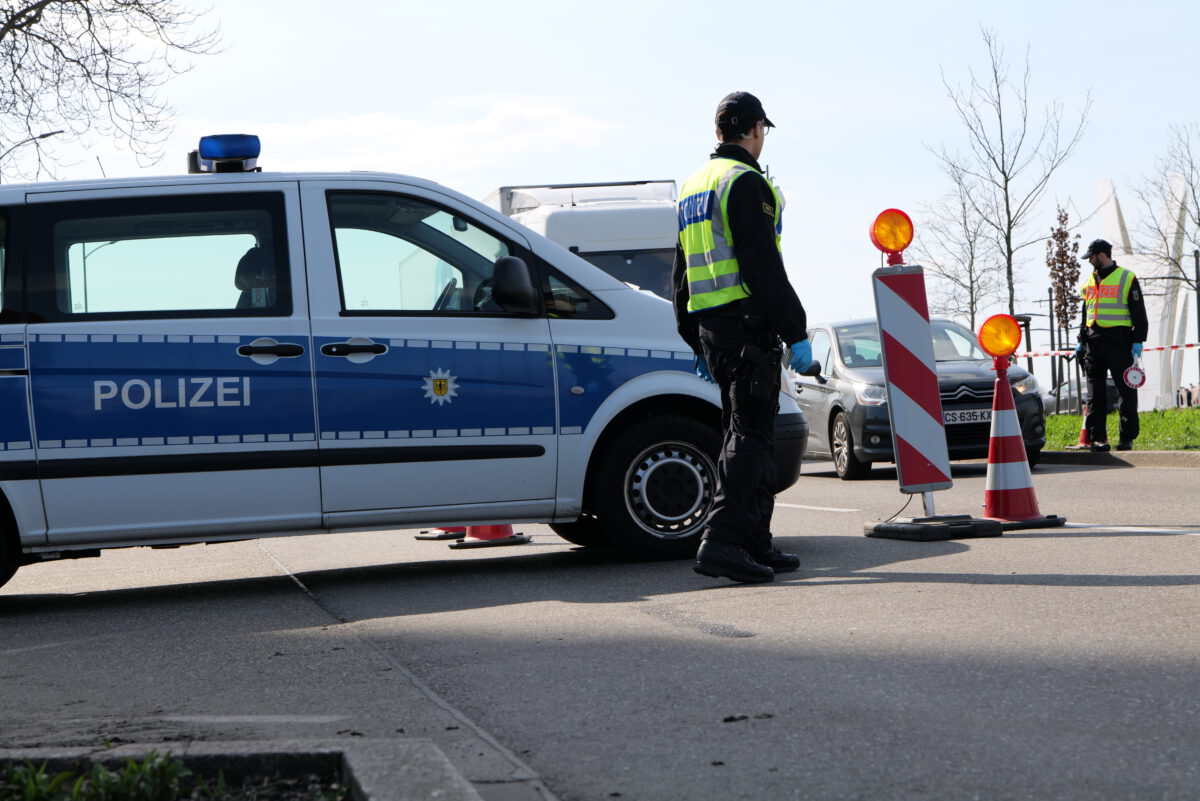
Seit September 2024 kontrolliert Deutschland wieder stationär alle Landesgrenzen ohne absehbare zeitliche Begrenzung– ein klarer Bruch mit den Regeln des Schengener Grenzkodex. Die neue Merz-Regierung spricht von Sicherheit und Asylstopp, doch faktisch haben die Binnengrenzkontrollen weder einen nachhaltigen Einfluss auf die Asylzahlen, noch können sie für mehr Sicherheit sorgen. Die neue Studie von Dr. Marcus Engler, Lea Christinck und Dr. Norbert Cyrus zeigt: Die Begründungen für Binnengrenzkontrollen basieren nicht auf Fakten, sondern auf leeren Versprechen. 

Um Handlungsfähigkeit zu demonstrieren, setzt die neue Regierung weiter auf Symbolpolitik – auch wenn das bedeutet, wissenschaftliche Erkenntnisse zu ignorieren, den Zusammenhalt in Europa zu gefährden und Recht zu brechen.

Teuer, herzlos und nutzlos

Die Grenzkontrollen sind teuer, ineffektiv und gefährden unsere Rechtsstaatlichkeit, während sie gleichzeitig kaum zur Reduzierung irregulärer Grenzübertritte beitragen. Verzögerungen an den Grenzen belasten Handel, Pendelverkehr und grenznahe Regionen massiv. Gleichzeitig warnen die Autor*innen vor einer gefährlichen Normalisierung der Kontrollen, die den europäischen Gedanken von Bewegungsfreiheit und Solidarität untergräbt.

Restriktionen an den Grenzen verhindern keine Migration – sie machen Fluchtrouten gefährlicher, stärken Schleusernetzwerke und belasten das Verhältnis zu Nachbarstaaten. Besonders alarmierend: Häufig treffen die Maßnahmen gerade jene, deren Einreise durch EU- und Völkerrecht eigentlich geschützt ist.

Die wichtigsten Ergebnisse auf einen Blick

  • Keine belastbaren Belege für Wirksamkeit gegen Schleusung oder irreguläre Einreisen
  • Einschränkungen für Schutzsuchende, Pendler*innen und die Wirtschaft
  • Klare Verstöße gegen EU-Recht und Aushöhlung des Schengen-Systems
  • Politische Grenzschutzmaßnahmen sollen als Symbol für Sicherheit dienen, entfremden sich aber zunehmend von fundierten wissenschaftlichen Erkenntnissen

Flucht nach Europa: “Auf dieser Route kümmert es niemanden, ob du lebst oder stirbst”

Wer sich auf den Weg nach Europa macht, um dort Schutz oder Zukunftsperspektiven zu finden, geht dabei in der Regel durch die Hölle – oder stirbt. Das zeigt ein neuer Bericht des UNHCR, Mixed Migration Centre and the Internationalen Organisation für Migration (IOM)

Dafür wurden von 2020 bis 2023 mehr als 31.000 Menschen in Italien und mehreren afrikanischen Ländern dazu befragt, was sie auf der Flucht nach Europa erleben mussten. An der Tagesordnung: Folter, körperliche Gewalt, sexuelle Gewalt und Ausbeutung, Versklavung, willkürliche Inhaftierung, Tod, Entführung zur Erpressung von Lösegeld, Menschenhandel, Zwangsarbeit, Organentnahme, Raub, kollektive Ausweisung und Abschiebungen. 

Extreme Gewalt: Es ist schlimmer als je zuvor

Die Daten zeigen, dass sich die Lage im Vergleich zum ersten Bericht von 2020 noch deutlich verschlimmert hat. Schutzsuchende sind auf dem Mittelmeer und der Flucht dorthin weiterhin extremer Gewalt ausgesetzt. Neue Konflikte in der Sahelzone haben die Zahl der Vertriebenen in der Region verdoppelt, insbesondere der Krieg im Sudan. Extreme Armut und die durch den Klimawandel verursachten Naturkatastrophen im Osten und am Horn von Afrika tun ihr Weiteres. In den Transitländern fallen außerdem immer mehr Flüchtende einem starken Anstieg von Rassismus zum Opfer, oft ausgelöst von politischen Entscheidungsträger:innen wie dem tunesischen Autokraten Saied, der gerne gegen Geflüchtete hetzt.

Wenig Schutz entlang der Fluchtrouten, dafür anhaltende Straflosigkeit

Ein riesiges Problem sind mangelnde Sicherheitsnetze entlang der Routen nach und durch Nordafrika. Schutzsuchende sind dort in der Regel völlig auf sich gestellt. Sie müssen Gebiete durchqueren, in denen bewaffnete Gruppierungen und kriminelle Banden sie ausbeuten, missbrauchen, verschleppen. Wird eine Fluchtroute unpassierbar, zum Beispiel, weil sie durch Konfliktzonen führt oder Grenzbeamte dort stärker kontrollieren, verlagern sich die Wege in noch entlegenere Gebiete. Dort sind die Menschen dann wiederum noch größeren Risiken ausgesetzt. Gleichzeitig herrscht faktisch vollständige Straflosigkeit für Schmuggler und andere bewaffnete Gruppen. Im schlimmsten Fall werden sie noch von Regierungen unterstützt, wie zum Beispiel in Libyen.

Wir dürfen uns an diese Geschichten niemals gewöhnen

Organisationen und Staaten entlang der Routen scheinen sich laut des Berichts fast schon an den Missbrauch gewöhnt zu haben, der dort alltäglich stattfindet. Von einem “gefährlichen Gefühl der Resignation” und einem unaufhaltsamen Verlust von Hoffnung ist die Rede. Dabei gibt es sehr wohl Lösungen und Schutzmaßnahmen; mal ganz abgesehen davon, dass sich Staaten im Rahmen des Völkerrechts und anderer Instrumente dazu verpflichtet haben, Leben zu retten und Menschenrechte zu achten. 

Es braucht Friedensanstrengungen, Armutsbekämpfung, konkrete Maßnahmen zum Schutz vor den Folgen des Klimawandels. Und für diejenigen, die ihr Zuhause verlassen müssen, braucht es sichere Fluchtrouten, humanitäre Visa und Solidarität. In anderen Worten: Wir müssen dringend handeln. 

Aber die “Angst” vor irregulärer Migration und der Unwillen von Regierungen verhindert, dass klar benannt wird, welcher Horror auf den Migrationsrouten geschieht. Mit welchen Akteur:innen man zusammenarbeitet, um Menschen daran zu hindern, nach Europa zu kommen. Und wie lieber weiter Menschen sterben sollen, bevor man hierzulande seiner Verantwortung nachkommt. Spätestens nach diesem Bericht kann niemand mehr sagen, man hätte es nicht gewusst.

EU-Partner setzen Flüchtende in der Wüste aus

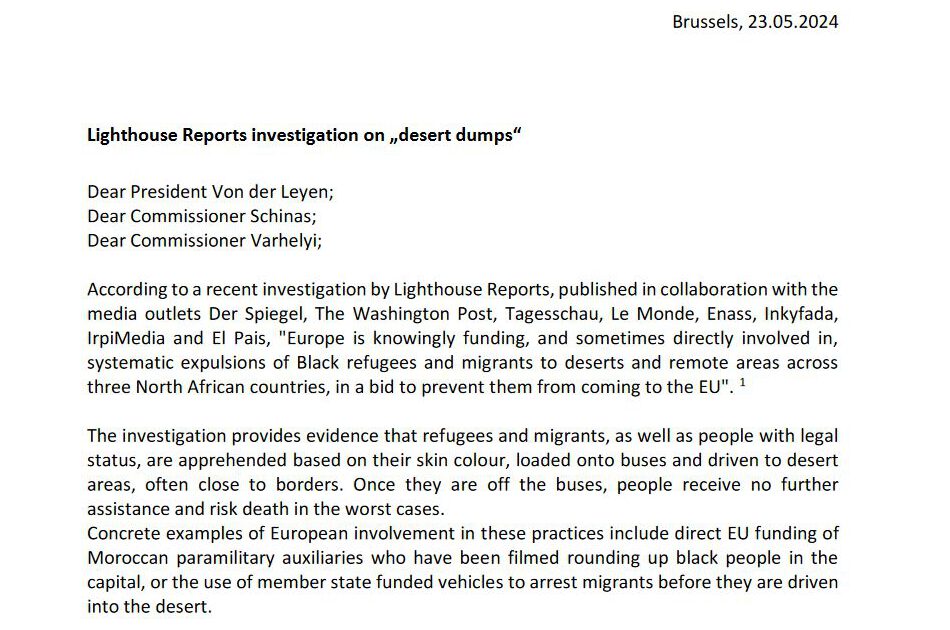
Eine Ende Mai erschienene Investigativrecherche, veröffentlicht von u.a. Lighthouse Reports, Spiegel und der Tagesschau zeigt auf, wie  in Marokko, Mauretanien und Tunesien systematisch Menschen von Sicherheitskräften anhand ihrer Hautfarbe aufgegriffen, in Busse verladen und in unbesiedelten, oft Wüsten- Gebieten ausgesetzt werden. Ohne weitere Unterstützung sind diese Menschen – auch Frauen und Kinder – dann auf sich allein gestellt und damit der Gefahr ausgesetzt,  entweder von Menschenhändlern oder Verbrecherbanden aufgegriffen oder im schlimmsten Fall dem Hungertod ausgeliefert zu sein. 

In den letzten Monaten wurden diese Vorfälle nicht nur unzählige Male dokumentiert, der Bericht liefert auch Beweise, dass für diese Vorgänge zum Teil Material wie Jeeps verwendet werden, die von der EU oder ihren Mitgliedstaaten finanziert werden. Deswegen habe ich einen Brief an Kommissionspräsidentin Von der Leyen und  Kommissare Varhelyi und Schinas geschickt, in dem ich meine Besorgnis über diese Erkenntnisse ausdrücke und wissen möchte, ob der Europäischen Kommission die Praxis des „Wüstendumpings“ in nordafrikanischen Ländern bekannt ist und welche Konsequenzen  sich daraus ergeben für die Finanzierung und die menschenrechtliche Sorgfaltspflicht.

Ich habe außerdem einen parteiübergreifenden Brief unterstützt, in dem wir ebenfalls eine Erklärung und eine vollständige Überprüfung der Verwendung und des Einsatzes von EU-Mitteln verlangen. Wir fordern außerdem, diese Mittel im Falle eines Verstoßes gegen die Werte der EU sowie gegen europäische und internationale rechtliche Verpflichtungen unverzüglich einzubehalten.

Study shows: German internal border controls partly contrary to EU law

I have commissioned a critical analysis of Germany's internal border controls for the Green Group in the European Parliament to see whether they are compatible with EU law. You can read the whole study here on German and English read.

The current situation in the Schengen area

The absence of internal border controls is a fundamental principle of European law and the basic principle of the free Schengen area. Although internal border controls in the Schengen area should therefore be a strict exception, there has been a massive increase in these controls in Germany and other member states since 2015. According to the German government, the main reasons for this are more irregular migration, the threat of terrorism and the coronavirus pandemic. However, the question arises as to what extent the reintroduction of these internal border controls is compatible with EU legal obligations.

When internal border controls are permitted

The Schengen Borders Code only allows internal border controls in exceptional situations, for example if there is a threat to the security and order of a Member State. However, internal border controls may only be used as a last resort and may only be reintroduced temporarily, as the European Court of Justice (ECJ) has also confirmed.

The practice in Germany

Germany does not always seem to adhere to these regulations. The various federal governments have repeatedly extended internal border controls, especially at the border with Austria, since 2015. This is a clear violation of EU law. The expert opinion I commissioned comes to the conclusion that there is no legal basis for the controls at the border with Austria, which have been taking place since November 2017 "for reasons of migration and security policy". This means that these controls have been unlawful since then. 

The main problem here is that the German government is referring to increasingly vague risk situations instead of actual threats, as required by the Schengen Borders Code. In addition, border controls are often disproportionate.

Internal border controls are politically motivated

Overall, border controls increasingly appear to have a socio-political symbolic effect. At the same time, the European Commission is finding it difficult to stop this structural erosion of the Schengen Borders Code and is only insufficiently fulfilling its mandate and role as "guardian of the treaties". 

The way the German administrative courts deal with complaints against these internal border controls is similarly problematic. Here, the admissibility requirements are interpreted so narrowly that complaints against internal border controls are dismissed as inadmissible. Those affected therefore currently have no effective legal protection against unlawful internal border controls. This primarily affects EU citizens.

The reform in response – effectiveness to be awaited

After years of systematic misapplication of the Schengen Borders Code, the reform of certain parts of the law was recently completed. You can read more about this here in my briefing. The current reform of the Schengen Borders Code is therefore a response to these challenges. On the one hand, it expands the member states' scope for action, for example in the case of increased migration controls at internal borders. On the other hand, the requirements for Member States' internal border controls are being tightened. Whether this will lead to a reduction in internal border controls in practice depends above all on the Commission's willingness to enforce the new rules of the Schengen Borders Code.

25 successes of green politics in the EU Parliament 2019-2024

Zur gesamten und ausführlichen Übersicht. Und hier nun eine Zusammenfassung:

  1. European Green DealWe have introduced the first EU climate law, set up a European Climate Council and increased the share of renewable energy to 45% by 2030. We have also introduced a social climate fund to support poorer households.
  2. Energy efficiencyNew EU directive on energy efficiency, which sets the target for energy savings at over eleven percent by 2030.
  3. Phasing out combustion engines by 2035 and building a network of charging stations for e-cars.
  4. EU rail networkModernization and interconnection of the EU rail network through the regulation for trans-European transport networks (TEN-T).
  5. EU budget and nature policyAt least 30% of the EU budget is earmarked for climate investments, plus a biodiversity quota in the budget.
  6. Regional promotionGreen and feminist design of European regional funding, with at least 30% of the ERDF regional fund for climate protection.
  7. EU electricity market reform: Measures for a more sustainable and fairer energy market, including enabling energy sharing and banning electricity cuts.
  8. Protection of water birds and marine protectionBan on lead ammunition in wetlands to reduce the poisoning of waterfowl. Initiation of a stronger EU marine protection policy, which led to global agreements for the protection of biodiversity and the high seas.
  9. Supply chainsguidelineIntroduction of laws for sustainable supply chains and a ban on the import of products associated with forced and child labor throughout Europe.
  10. Right to repairEnforcement of a law that obliges manufacturers to repair defective products and gives independent workshops access to spare parts and instructions.
  11. Standard charging cableFrom summer 2024, a standardized USB-C charging cable for cell phones, laptops and cameras will be introduced in the EU, saving resources and making everyday life easier.
  12. Telephone chargesEnforce the abolition of hidden telephone costs within the EU by 2029 to avoid cost traps when making calls.
  13. Battery ordinanceNew regulations to ensure that batteries are replaceable and include stricter recycling requirements for e-car batteries.
  14. Digital Services Act (DSA)Creating a framework to regulate large digital platforms that restricts surveillance and ensures freedom of expression.
  15. AI regulationIntroduction of the world's first comprehensive legal framework for artificial intelligence, which sets ethical and environmental standards.
  16. Chips ActPromotion of semiconductor production in Europe with a focus on environmentally friendly manufacturing and the circular economy.
  17. Critical Raw Materials Act (CRMA)Ensuring that the mining of critical raw materials in Europe takes place in accordance with high environmental and social standards.
  18. Money Laundering ActIntroduction of a comprehensive EU law against money laundering and establishment of an anti-money laundering authority to monitor financial companies.
  19. China policyInfluencing EU-China policy, including a commitment to Uyghur rights and support for the democracy movement in Hong Kong and a response to the New Silk Road.
  20. Ukraine FacilityEnsuring long-term support for Ukraine from the EU, with a focus on compliance with environmental standards and transparency in financial assistance.
  21. Visa-free travel for KosovarsAchieving visa-free entry for citizens of Kosovo into the Schengen area from 2024, which promotes the European integration of the Western Balkans.
  22. Clear edge against OrbanFreezing of EU funds for Hungary due to corruption and violations of the rule of law, with disbursement linked to the restoration of democratic functions.
  23. Istanbul ConventionEU accession to the Istanbul Convention, which implements comprehensive measures to prevent and combat violence against women and domestic violence.
  24. Frontex surveillanceStrengthen fundamental rights monitoring at Frontex, including the establishment of a permanent monitoring group in the European Parliament to oversee the border protection agency.
  25. Minimum Wage DirectiveIntroduction of an EU-wide minimum wage directive that ensures fair wages and obliges countries with low collective bargaining coverage to draw up action plans.

Why crime statistics are not suitable for political discussions

The crime statistics for 2023 are currently being misused for populist propaganda against migrants and refugees. According to the PKS, the number of foreign suspects has risen. The CDU and CSU are therefore once again calling for immigration to be restricted. 

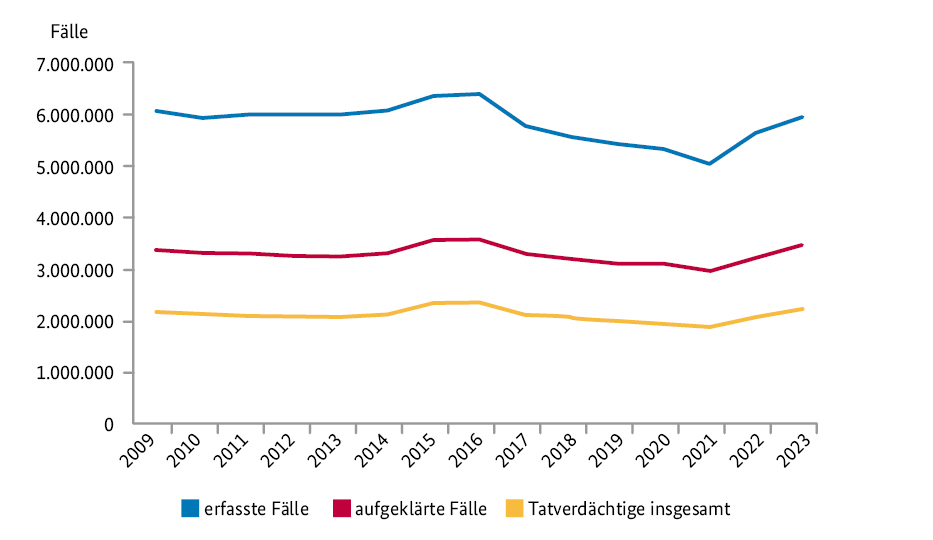
Around 5.94 million crimes were registered in Germany last year. This corresponds to an increase of 5.5 percent compared to the previous year. This is according to the police crime statistics 2023 which Federal Minister of the Interior Nancy Faeser presented in Berlin. 

The clearance rate also increased, with 58.4% of all recorded crimes being solved according to the report, slightly more than in the previous year. According to the PKS, violent crime is clearly a male phenomenon, but the origin of the suspects is currently causing a stir. According to the study, 923,269 of the almost 2.25 million suspects (up 17.8 percent) did not have a German passport. The CDU/CSU and other right-wing opinion leaders are now linking the supposed rise in crime to immigration in Germany. But that cannot be allowed to stand. 

How the BKA's crime research explains the increase

What is completely lost in the debate is the justification for the increase that the BKA itself has presented. 

First of all, it should be noted that the level of crime is not unusually high, but was higher in 2009/2016 with a lower overall population than today. 

Overall, the figure of almost six million criminal offenses or reports of criminal offenses in 2023 certainly does not stand out from the statistics. The current situation is therefore no more dangerous than in previous years, and there is no explosion in crime.

What is real is the increase compared to previous years, for which the BKA rational justifications

  1. After the end of the Covid-19 restrictions, people are moving around more again, especially in public spaces, which increases the number of possible crimes. The end of the pandemic measures provides more opportunities and interactions that did not exist during the pandemic. 
  1. Inflation and psychological stress, exacerbated by the pandemic, are affecting children and young people in particular and increasing their susceptibility to crime. In addition, we have had exceptionally high inflation in the meantime, which has further increased the pressure on the population and thus created further incentives for crime. 
  1. The increased number of immigrants and the associated social and economic challenges are logically reflected in an increase in non-German suspects.

The general rise in crime is therefore not the fault of migrants, but of underlying conditions such as the end of the pandemic measures and increased inflation. Although migration is one aspect of the statistics, it is not the decisive factor. 

Accordingly, the argument that crime is so high because so many people have immigrated is not admissible because it completely ignores the BKA's other justifications. 

Notes on the statistics

The rise in crimes committed by non-Germans is often highlighted in the debate. One explanation for this increase is the rise in immigration. This is because the proportion of the non-German population in Germany has also increased overall, which means that the number of recorded crimes has also risen because there are more immigrants. A purely statistical effect. 

In addition, the number is higher among non-Germans because the police investigate more frequently and non-Germans are reported more often. In addition, the victims in this area are often people with a migration background themselves, for example when looking at violent crimes in asylum homes. The statistics also include offences under immigration law, for example, which can only be committed by this group: around 93,158 cases of 'unauthorized entry' or 187,059 cases of 'unauthorized residence', both of which have risen sharply.

The PKS therefore shows that foreigners in Germany have not become more criminal. 

The increase in recorded criminal suspects without a German passport can primarily be explained by the high level of immigration. 

There is another statistic to counter the fear-mongering surrounding crime statistics. According to the recently published Global Peace Index, Germany is one of the safest countries in the world. It is ranked 15th out of 163 countries. 

Global Peace Index: https://www.visionofhumanity.org/maps/#/ 

What experts say about crime statistics

The Professor of Criminal Law Tobias Singelnstein describes it as „bizarre“ how much the figures are over-interpreted every year. According to him, the PKS is an activity report of the Policenothing more. It records all suspicious situations that come to the attention of the police â usually through private reports. The statistics therefore only reflect what the police can see and want to record. 

Among other things, the PKS reports more violent crimes, 8.6 percent more than in the previous year. According to Singelnstein, this only means that the police have dealt with more cases. This may also be due to the fact that more crimes are reported. Research has shown, for example, that people are more likely to report people they perceive as not belonging to their own group. 

Criminologist Martin Thüne describes the PKS as „distorted and manipulableâ. Most of the attention in the public debate is focused on the fact that the proportion of suspects with foreign passports in the PKS has risen. According to Thüne, this has little significance because the PKS is systematically distorted at this point and it is quite normal from the logic of the PKS that foreign suspects are overrepresented in these statistics. On closer inspection, this cannot really be otherwise.

This is due, for example, to the fact that the Number of foreign suspects is added together with the foreign resident population. This includes traveling groups of tourists, deployment forces or commuters. They should actually be considered individually. The police themselves also point this out, but it is ignored. 

The Criminologist André Schulz warns against hasty conclusions and misinterpretation of the data. For example, the PKS cannot show whether someone was actually guilty of a crime, nor whether the proceedings were later discontinued or the person was demonstrably innocent, so the statistics record all cases of suspicion, but not whether a crime was actually committed. 

Schulz also emphasizes that origin, ethnicity or religion have nothing to do with whether people become criminals or not, but that social origin is the decisive factor. This applies equally to Germans and non-Germans. The separate recording of German and non-German suspects is „pointless and disastrous“ because it only serves „racism and xenophobia“.

Conclusion: PKS is not suitable for incitement against migrants

There are rational reasons for the general increase in crime from the BKA's crime research. The end of the pandemic and high inflation led to more incentives and opportunities to commit crimes. The increase in non-German crimes can be explained by the fact that immigration is generally on the rise. The number of non-German suspects is roughly at the same level as in 2015 and 2016. Overall, the current number of offences does not stand out.

There are various reasons for the rise in crime and it should be noted that crime and its causes generally need to be combated more strongly and in a more targeted manner. The CDU/CSU and right-wing media makers can continue to use the PKS to incite hatred against minorities, but based on the facts and expert assessments, this is highly dubious and, to put it mildly, pure xenophobic populism. 

Briefing: Reform of the Schengen Borders Code

What is it about?

The Schengen Borders Code regulates entry conditions and border controls at the EU's external and internal borders. It deals, for example, with the question of the conditions under which internal border controls are possible.

The Borders Code is an important instrument for ensuring freedom of movement in Europe; however, Member States often do not comply with the Code. For example, they introduce internal border controls and disregard the legal basis for them. These controls jeopardize the Schengen area by hindering the free movement of people, goods and services, which is so important for the functioning of the EU and its associated countries (Switzerland, Norway, Iceland and Liechtenstein). In border regions in particular, internal border controls not only cost a lot of money, but also restrict people's lives. At the same time, they often do not lead to the achievement of self-imposed goals, for example because they cannot prevent asylum applications, although this is repeatedly claimed.

The reform

The European Commission attempted to reform the Schengen Borders Code in 2017, but the member states were unable to agree on a common position.

After the Member States closed internal borders during the coronavirus pandemic without coordination at EU level, the Commission proposed a new reform that includes provisions for major health emergencies, such as pandemics.
The Commission proposal from December 2021 was controversial to say the least, followed by an even more problematic Negotiating position of the Member States. Despite the often emphasized importance of the Schengen area for the realization of freedom of movement in the EU, these texts would have led to Member States being able to introduce endless internal border controls under certain circumstances. The European Parliament, on the other hand, with its Negotiating position a compromise that protects the Schengen area.

ECJ ruling on border controls

Parallel to the reform process of the Schengen Borders Code, the European Court of Justice has ruled in a Basic ruling not only interpreted the duration of internal border controls under the current code very strictly, but also clearly stated that endless internal border controls violate the freedom of movement enshrined in EU law. This made it clear that freedom of movement is a right that EU member states may not restrict indefinitely. The co-legislators (Council and Parliament) must therefore find a balance between "freedom" and "security" that only works with a fixed time limit for internal border controls in the reformed Schengen Borders Code.

The final compromise

The interinstitutional negotiations led to a Compromiseon which we will vote in the European Parliament in the last plenary week of the legislative period (end of April 2024).
We are critical of the outcome of the negotiations because: The maximum Duration of internal border controls to be increased from the current 6 months to 3 years. However, Member States have a new, more detailed reporting obligation when they introduce internal border controls. In return, the Commission has slightly more duties and powers to monitor application. Experts doubt whether this will lead to border controls being more restricted.

It will also there are additional reasons to allow internal border controls. This sensibly includes a health emergency on a large scale, but also the highly controversial reason of unauthorized secondary migration of third-country nationals on a large scale. This effectively legalizes the practice that has been in place since 2015 of member states introducing internal border controls in order to "curb" "irregular" migration.

The outcome of the negotiations also includes a new procedure for the internal transfer of third-country nationals without the right to stay between member states. This procedure will probably lead to an increase in "racial profiling" and, in the worst case, even Chain deportations can take place.

The introduction of the term "Instrumentalization", Member States can limit the number of border crossing points and their opening hours and intensify border surveillance if they feel that they are being instrumentalized. However, the exact cases that are considered instrumentalization are not defined at all and are therefore left to the discretion of the member states. In addition, the possibilities for police checks and the general number of police officers deployed on the territory have been Control and monitoring technologies expanded. These additional provisions shall enter into force immediately after publication if Parliament and the Council have given their consent.

In practice, however, it remains to be seen whether the Member States will actually comply with these new rules and whether the Commission will use its powers as guardian of the treaties to ensure that they do.

Syria: The current humanitarian situation and possible EU action

Syria has been at war for 13 years. In 2011, the Syrian revolution was violently crushed by dictator Bashar al-Assad as part of the Arab Spring. Iran and Russia support the Assad regime, which is internationally ostracized for brutal human rights violations. Half a million people have already been killed, 13 million people have been displaced – more than half of them live outside Syria. The majority of Syrian refugees have fled to neighboring countries such as the Turkey (3.1 million people), Lebanon (785,000 people) and Jordan (640,000 people) found refuge. The conflict has been increasingly forgotten in recent years.

Twice displaced: The 2023 earthquake

The violent earthquake on February 6, 2023 caused the situation in the northwest of the country to deteriorate dramatically. More than 56,000 people died in Syria and Turkey and over two million people were left homeless overnight. In total, more than 22 million people were affectedincluding 9 million in Syria alone. 

There is still a lack of basic supplies, shelter, electricity and access to healthcare. Most of the affected families are still living in destroyed houses or in tents. The disaster has also severely affected the mental health of many people. Many have lost family members and friends. The already precarious humanitarian situation has become even worse: more than 15 million people in Syria, including 7 million children, are in urgent need of humanitarian aid. That is five percent more than in 2022. At the same time, there is a massive lack of humanitarian aid and funding, while Assad tries to rehabilitate the reputation of his regime through aid deliveries and to end the international isolation of Syria – with success. If you would like to know more, you are welcome to visit my article from November take a look inside.

The current European policy on Syria

While the Arab League and other states such as Turkey are gradually normalizing their relations with Syria, Europe's Syria policy continues to be based on sanctions against the Assad regime and direct humanitarian support for the Syrian civilian population. The latter is supported by instruments such as the Neighborhood, Development and International Cooperation Instrument (NDICI)the MADAD Fund and the Facility for refugees in Turkey made available. As part of the revision of the Multiannual Financial Framework (MFF), i.e. the long-term EU budget until 2027, the Commission has, for example, proposed an additional 5.2 billion to support Syrian refugees in Syria, Turkey, Jordan and Lebanon. In addition, exemptions are needed for trusted international humanitarian aid organizations so that they can help quickly and effectively in Syria. We are committed to ensuring that sanctions do not hinder the provision of vital humanitarian aid, but rather target the elites and war criminals. The European Parliament's Research Service has analyzed the impact of the sanctions here analyzed.

In addition, in the Committee on Foreign Recommendation to the Council, the Commission and the European External Action Service (EEAS) on the situation in Syria agreed. In it, we once again emphasize the Assad regime's serious human rights violations and the EU's duty to refrain from any normalization with him as long as there are no profound and verifiable changes through the implementation of the Resolution 2254(2015) of the UN Security Council there. This includes the release of political prisoners, information on the fate of missing persons and victims of enforced disappearances, and an end to all attacks on and obstruction of humanitarian aid. This is particularly important because there is still a significant threat to people across the country, such as Confidential sources from the Federal Foreign Office suggest. In addition, the Fighting in Syria resumeswhich is why the United Nations is calling for a ceasefire.

Other proposals in the UN resolution include stepping up the fight against Russian and Iranian disinformation about Syria, combating the ongoing impunity in Syria and providing greater support for civil society and the democratization processes being pursued.

EN